
Queer and Trans Experiences of Eating Disorders: The Role of Minority Stress
Written by: Allyson Inez Ford, LPCC
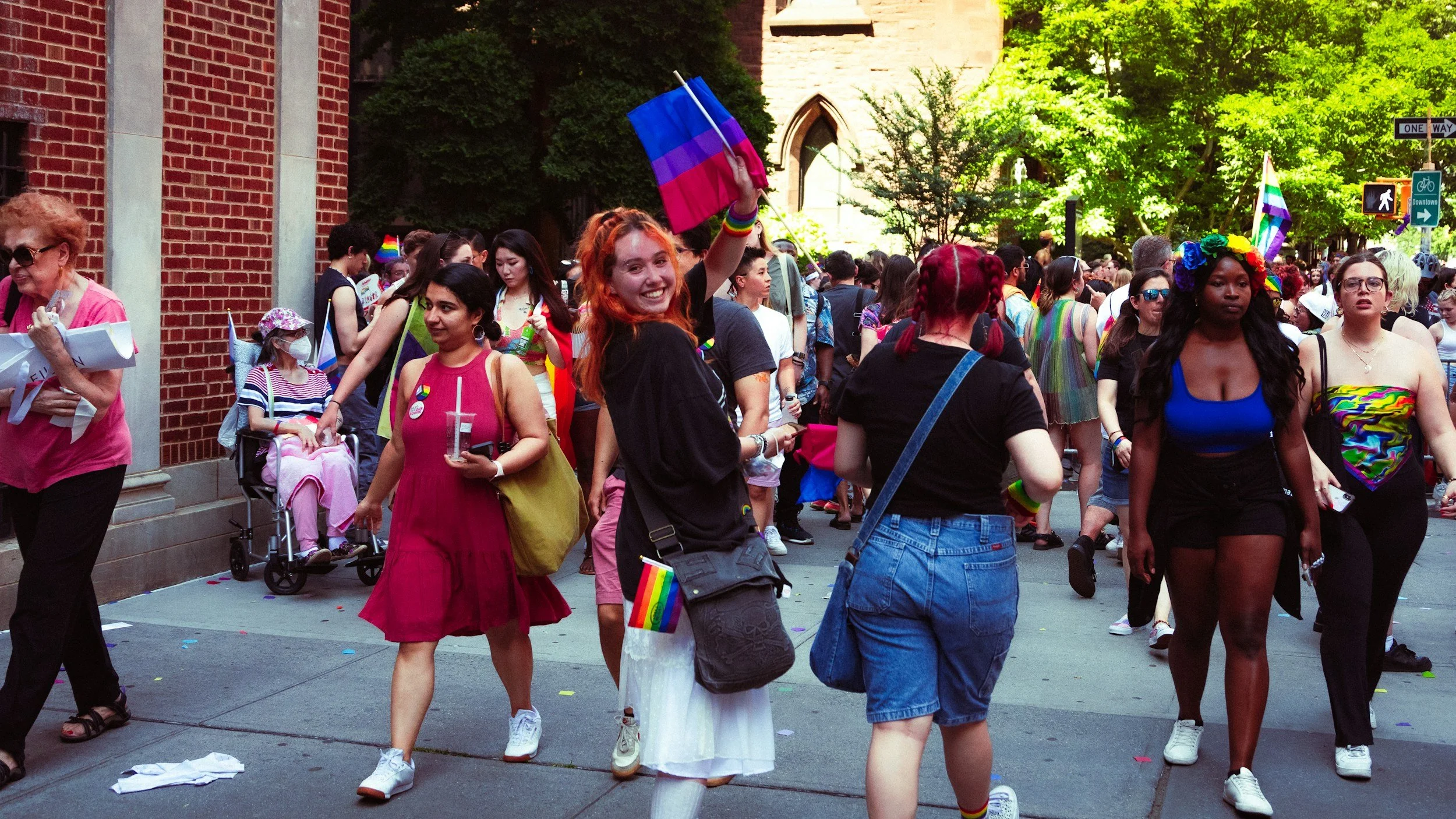
Many people are surprised to hear that eating disorder rates are actually higher among queer and trans folks than their hetero and cis peers- with trans folks having the highest rates of eating disorders among all demographics of people. I suspect this is because, in the same way LGBTQIA+ people are erased from mainstream society, they are also often pushed to the margins in eating disorder treatment (and mental health treatment more broadly). This needs to change. Being affirming of queer and trans folks is life saving, and it’s important for hetero and cis folks to know their role and do their own learning/ unlearning.
Eating disorders don’t just come up out of nowhere. For LGBTQIA+ people, the relationship to their body and food is profoundly impacted by societal forces and interpersonal trauma: cisheterosexism, dominant religious ideologies that describe queerness as moral “sin”, discrimination and bullying in work or school, family rejection, and barriers to affirming healthcare- to name a few. These factors directly shape the development, maintenance, and recovery trajectory of eating disorders.
As a multiracial, queer, neurodivergent therapist specializing in eating disorders and OCD who works with many queer and trans clients, I’ve seen how essential it is to understand these intersections. And, affirming, anti-oppressive care is the foundation of ethical, effective treatment for all people- not just marginalized folks.
In this blog post, I’ll break down key concepts from my lecture on eating disorders in the LGBTQIA+ community that I was asked to give for ANAD’s recovery coaching training. My hope is to offer guidance for clinicians, eating disorder sufferers and their loved ones who want to support queer and trans people in an affirming and loving way.
Understanding the LGBTQIA+ Community
Before we dive into eating disorder specifics, let’s go over some key concepts to understand about the queer community. If you already know this stuff- amazing! Feel free to skip ahead to the eating disorder and body image specifics.
The LGBTQIA+ community encompasses a wide spectrum of identities related to sexual orientation, gender identity, and sex characteristics. These include lesbian, gay, bisexual, transgender, queer/questioning, intersex, and asexual people, as well as many identities captured within the “+,” such as pansexual, genderfluid, and Two-Spirit.
Every queer and trans person’s experience is unique. There is no singular “queer body,” “queer look,” or queer narrative. Affirming care starts with recognizing this diversity and avoiding assumptions and stereotypes about queer culture. Please click on the link above to understand the differences between the subgroups under the queer umbrella.
Affirming and Respectful Language Saves Lives
Affirming language is suicide-prevention, according to a 2025 study by The Trevor Project. You don’t have to get it perfect, but making a sincere effort goes a long way and is a major protective factor against mental health distress and suicidal ideation for queer and trans folks.
Some key principles for using affirming and respectful language:
Pronouns are for everyone, including cisgender people.
Pronouns are not “preferred.” They are part of someone’s identity, the same way we wouldn’t call a cis person’s pronouns ‘preferred’, trans and non-binary people’s pronouns are also non-negotiable, not a preference.
Misgendering creates minority stress and deepens shame and isolation.
Mistakes happen. Correct yourself and move on, over-apologizing shifts the focus to your feelings and can create an unwanted spotlight on the trans/non-binary person’s identity.
Practice gender-neutral language in your everyday life (“folks,” “everyone,” “y’all”), this not only makes it easier when you conversate with queer and trans folks, but also shows you take this seriously and are doing the work to unlearn cisheterosexim in your daily life.
Never assume sexuality or gender: there is no “look” or relationship status that confirms queerness, believe your loved one’s experience.
Gender and sexuality can evolve throughout the lifespan, both are fluid and exist on a spectrum. Shifting identities don’t equal “confusion” or make them less valid.
Affirming language is one of the simplest, most powerful interventions when it comes to being inclusive to queer and trans folks and truly is the bare minimum of what we should aim to do. Below are more ways to show up as an ally.
Why Eating Disorders Are More Prevalent Among Queer & Trans People
Research consistently shows that LGBTQIA+ folks, especially transgender and gender-diverse people, experience higher rates of disordered eating and eating disorders than cisgender, heterosexual peers. These disparities are shaped by minority stress, body dissatisfaction related to gender identity, and systemic barriers to affirming care.
Key research findings include:
Disproportionately Elevated Prevalence: Transgender and gender-diverse folks report significantly higher levels of eating disorder symptomatology compared to cisgender groups. In one large national study, transgender and gender-diverse participants had higher eating disorder symptoms and often engaged in eating and dieting behaviors specifically to alter gendered physical traits, underscoring the role of gender congruence and affirming care in risk and recovery. PubMed
High Rates Across Studies: A 2023 review found that up to 20–50% of transgender and gender-diverse individuals report disordered eating behaviors, and more than 30% screen positive for eating disorder symptoms, with many describing these behaviors as linked to coping with gender dysphoria. PubMed
College Student Data: National survey data from TGD college students showed elevated eating disorder risk across gender-diverse subgroups, with gender-queer/non-conforming students reporting nearly 39% prevalence of elevated ED risk. PubMed
Youth Disparities: Among LGBTQ youth aged 13–24, nearly 9% reported a clinical eating disorder diagnosis, and almost a third suspected they had one, with transgender boys/men and nonbinary youth reporting the highest rates. The Trevor Project
Historical and Broader Surveys: Older national surveys suggest that more than half of LGBTQ adolescents have been diagnosed with an eating disorder in their lifetime, with many more engaging in disordered eating behaviors — indicating long-standing elevated prevalence in this community compared to general youth populations. PMC
Why these disparities occur:
These elevated rates of eating disorders are linked to minority stress (chronic stigma, discrimination, identity-related trauma fueled by systems of oppression), body dissatisfaction rooted in gender incongruence, and pressure to conform to community-specific body norms. Barriers to gender-affirming medical care can further complicate the relationship between identity and disordered eating- which is one reason why trans affirming healthcare is life saving.
Body Image and Queer Identity
Body ideals vary across queer communities. Like I mentioned earlier, while queerness has no “look,” many queer and trans folks feel pressure to present in specific ways based on their community subgroup.
Examples include:
Gay men facing pressure toward leanness or muscularity
Transmasculine people restricting to suppress curves or avoid menstruation
Lesbian women navigating stereotypes around femininity vs. masculinity
Nonbinary people feeling pressured to achieve a ‘perfectly androgynous body’
For trans and nonbinary people especially, body dissatisfaction may stem from gender dysphoria, as well as internalized diet culture. Eating disorder behaviors can become attempts to align the body with gender identity when medical care (hormones, surgeries) is inaccessible.
One helpful question I ask clients is:
“Which of your body image concerns feel tied to diet culture, and which feel tied to desire for gender congruence?”
This exploration takes time, is fluid and it likely won’t be so cut and dry. Sometimes asking folks to identify a percentage can be more helpful (i.e. “70% of my body image distress feels tied to gender dysphoria, while the other 30% feels related to diet culture.”). Building awareness of this distinction will inform the action we need to take in terms alleviating and coping with the appearance related distress.
Shame and Isolation vs. Pride and Community
Shame and isolation are powerful contributors to the development and continuation of eating disorders. I often say that eating disorders are disorders of disconnection. They disconnect us from pain, but also from joy, meaning, purpose and the important people in our lives. Due to a culture that actively discriminates against queer and trans folks, many never embrace their authentic self and isolate, and blame themselves for the hate they have internalized from the world. Because of this, it is so important to help queer and trans folks find safe community spaces where they are affirmed and warmly embraced. The beautiful thing about therapy is, it can be the first space where a person feels fully accepted for their authentic self, and this can lead to hope about cultivating community and other safe relationships, leading to a sense of belonging that the person may have never felt before.
Shame & Isolation
Chronic minority stress fuels shame and secrecy.
Shame increases body hatred and internalized beliefs like “my body is wrong.”
Isolation reinforces reliance on eating disorder behaviors or body image compulsions as coping mechanisms.
Pride & Community
Pride is a protective factor against the discrimination queer and trans folks face on a daily basis. Pride also moves us out of isolation and into community with other LGBTQIA+ folks. This is powerful and offers:
Representation and body diversity
Chosen family
Community care and activism
Resource sharing/ mutual aid
A buffer against minority stress
For many queer and trans clients, community building needs to be a central to someone’s treatment plan, not an afterthought. This will be especially true if the person doesn’t already have solid friendships or connections with other queer and trans folks. Many big cities have things like queer book clubs, queer hiking groups or game nights- these can feel more approachable than a support group if being expected to talk about your experience or feelings feels too scary! As a therapist, I love helping my clients find community building events and opportunities in their local area. If you’re in San Diego and want resources, feel free to reach out so we can give you our favorite spaces!

Final Thoughts
For queer and trans clients, recovery is not only about nourishing the body. It’s about reclaiming identity, building supportive community, accessing safety, and healing from the systems that created the shame in the first place.
We offer eating disorder therapy and body image therapy for queer and trans folks in CA, WA, UT, FL and MD- and everyone on our team identifies as either queer or trans- or both!
