
"But What If Restriction Actually Makes Me Feel Good?" Insights From an Eating Disorder Survivor and Therapist
Written by: Allyson Inez Ford, MA, LPCC | Founder of ED & OCD Therapy

Is it possible that restricting food actually feels good in the moment?
This is a phenomenon that many people with eating disorders relate to. I've heard it countless times from clients and peers who struggle, and I would have said it myself during my active anorexia too.
As a clinician, it can be tempting to talk a client out of this, out of fear that anything else might be colluding with the eating disorder.
But talking people out of harmful eating disorder behaviors rarely works- there would be no need for eating disorder therapists if that was the case! So let's look at what might be more helpful.
First, Let's Understand Why Restricting Food Might ACtually Feel Good for Some people
I'm a true believer that knowledge is power. Helping a client understand what might be happening neurobiologically and psychologically can increase the compassion they have for themselves, which creates more room for change. And, clinicians' own increased understanding helps us resist the knee-jerk reactions that tend to push clients away.
The Neurobiological Perspective
A 2013 study by Kaye et al. explored how starvation impacts the brain in people with anorexia nervosa. Here's some of what it found:
There's an anxiety-reducing effect tied to food restraint and reduced daily caloric intake in people with anorexia nervosa, and on the contrast, food consumption in people with anorexia tends to stimulate dysphoric mood.
Malnutrition can deplete tryptophan, the precursor to serotonin, which regulates mood. This depletion leads to reduced serotonin activity and, in turn, decreased anxiety in anorexia.
A malnourished brain often shows decreased reward circuit activity, which can make food feel less pleasurable and even dysregulating, leading to more food avoidance.
As you can see, it becomes a cycle where the person with the genetics for anorexia actually does feel psychological relief, momentarily, from food restriction.
The Societal Perspective
We live in a world embedded in anti-fatness, one where self-control and perfection are prized. Restrictive eating disorders and weight loss are highly sought after, reflected in the multi-billion dollar weight loss industry. So of course it can feel good to "achieve" the thing everyone else seems to want: weight loss, ultra-thinness (though not all eating disorders result in thinness) These behaviors get rewarded and treated as morally good, even pure.
So when someone says restricting feels good, it's worth asking: does it actually feel good, or does it feel like one of these instead:
Being admired for self-control and determination
Being noticed in a positive light
Feeling like you're finally "good" at something
Feeling accepted
Having something others desperately want
Increased body privilege
You’re not wrong for feeling any of these things, we are wired to seek belonging, a sense of worth and to feel good. It’s our thin obsessed society that is the problem, attaching body size and shape to our worth as human beings.
Anorexia as an Anesthetic
If you're constantly hungry, or trying to ward it off, if your mind is consumed by food, exercise and your body, everything else becomes secondary. Painful emotions like rejection or loneliness stop feeling as sharp. It’s more like a dull ache in the background that doesn’t seem to matter as much.
If your emotions feel muted, like you're living in gray instead of color, life can feel more manageable- this is especially true for those who don’t have safe people to co-regulate with, don’t have other outlets for emotions or are constantly finding themselves in states of fight, flight, fawn or freeze.Eating disorders actually modulate trauma symptoms and bring us back into our window of tolerance, temporarily.
Anorexia can present itself as a "solution" to the unbearable parts of being human- almost like a retreat, a break from the overwhelming responsibilites of life or like a bubble that keeps out painful memories and people.
So is it really the restriction that feels good, or the distance it creates from deeper pain? And if it's the latter, how else can we cope with life's pain?
So What's the Catch?
The high from restrictionalways wears off. If nothing meaningful changed during or after, and if you keep restricting to endure your life, you'll need to keep doing it (usually more and more) to get the same effect. Gradually you end up replacing the pain you were trying to avoid with the long term damage of an eating disorder. It works similarly to substance misuse in this way: you keep falling into the same trap, and life starts to feel like Groundhogs Day. It might feel safe, but in my experience, life starts to feel less meaningful and…worth it (I know that sounds bleak, and it is).
You Begin Compromising on Your Values
Living a meaningful, satisfying life is connected to how aligned our values and our actions are. Eating disorder behaviors eventually force a compromise here. Eating disorders have a way of not only numbing our emotions, but ruling our thoughts, behaviors, relationships and time. The energy it takes to uphold an eating disorder takes time away from the things most important to us: family, friends, our passions, life’s little pleasures. It's hard to stay present in any of these areas when your mind is consumed by food and your body. Soon, you get so disconnected from who you actually are that the safe bubble feels empty and cold (literally).
Your Disconnect From the World Is a Disconnect From Yourself
Over time, a real disconnection happens within. A sense of connection to your body and spirit? Gone, or muted. Feeling satisfied with who you are? It's never enough for an eating disorder. Your values? You move further and further away from them. This self-disconnect turns into disconnection from others and the world around you. Your body might have gotten smaller, but so has your life. That was the most painful part for me- realizing all the time and energy I put into my eating disorder left me with so much emptiness and a loss of meaning in life. It is truly self-abandonment.
There Are Other Ways to Cope With Life's Pain
One of the biggest parts of many people's recovery is learning to cope with life's inevitable suffering and pain in new ways, ways that don't come at such a steep cost to yourself. You will question whether it's worth it when the grief and sorrow surface. But eventually you experience a joy, a passion or an excitement so palpable that it all becomes worth it, and you remember why you started. Certain parts of recovery can feel like a childlike rediscovery of life’s joys. I remember one day a few years into recovery, the colors around me suddenly seemed brighter and sharper. I was in awe. The ability to enjoy the present moment and feel excitement slowly started to come back. it was gone so long I almost didn’t realize what I was missing!
To anyone in the trenches right now: keep going. It can get better. It takes a lot of time, ups and downs, tears, patience, trusting the process…but it can get better.
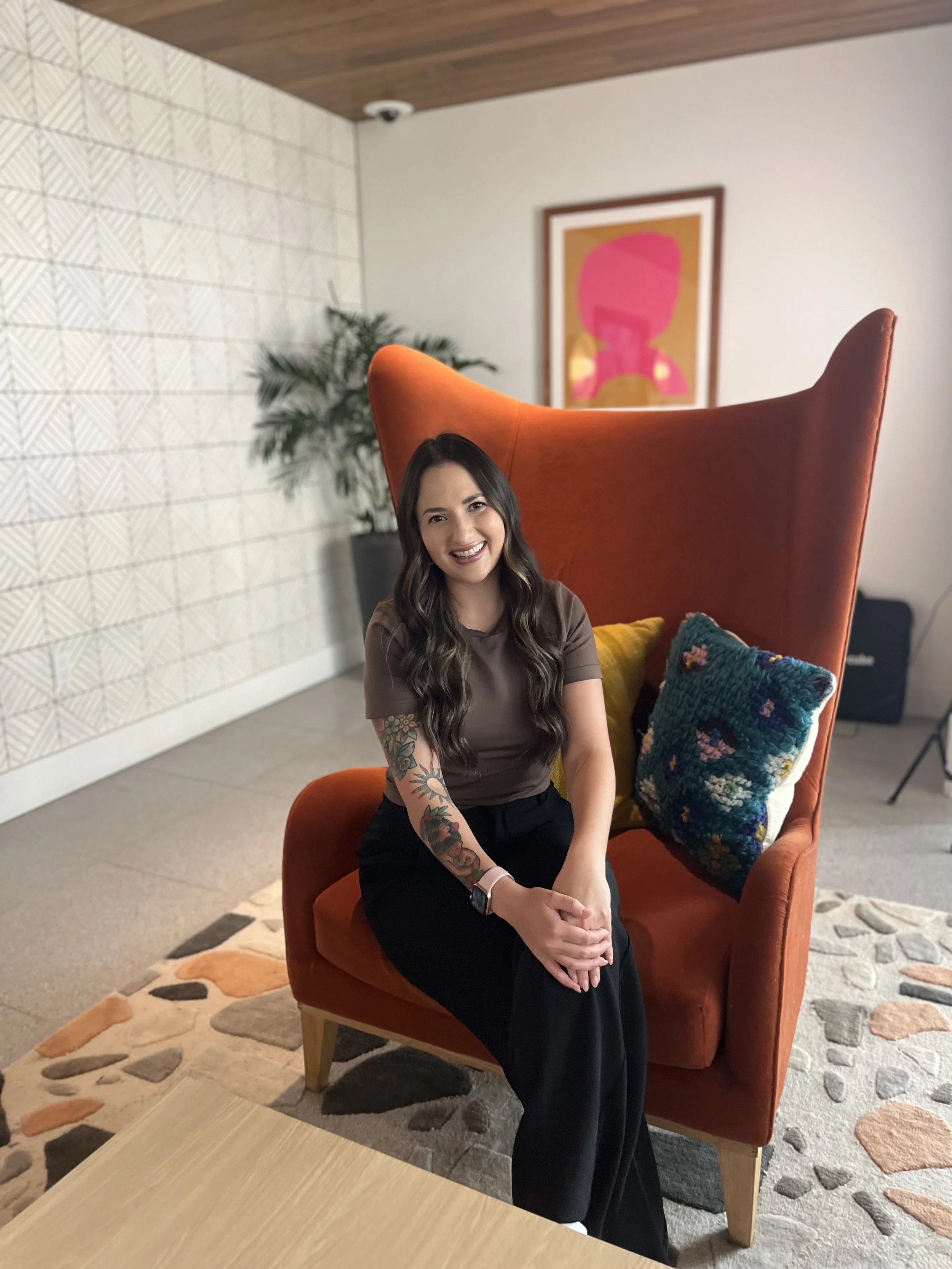
Final Thoughts From a SAn DIego Eating Disorder Therapist
Only you can decide what restriction actually feels like for you and what to do about it. These are things I've learned along the way, in my own life and in the lives of the people I work with. Everyone has different reasons and different protective factors. Still, I hope you know that whatever the reason is, healing is also possible. Tending to that pain inside can look different from starving, bingeing and purging it away, because that never really makes the pain go away anyway. If it worked, we wouldn't have to keep doing it. So even if eating disorder recovery feels like jumping off a cliff at times, remember that the eating disorder is never truly going to save you.
If any of this resonates with you, know that you don't have to untangle it alone. We offer a free 15-minute intro call for therapy seekers in California, Maryland, Tennessee, Utah and Washington State. We also offer eating disorder recovery coaching worldwide! Reach out and let's talk about what support could look like for you!
