
How Your Attachment Style Can Affect Your Parenting
Written by guest writer: Elizabeth Loyola, Psy.D. | Founder of The Child Psychology Center in Carlsbad and Sacramento, CA
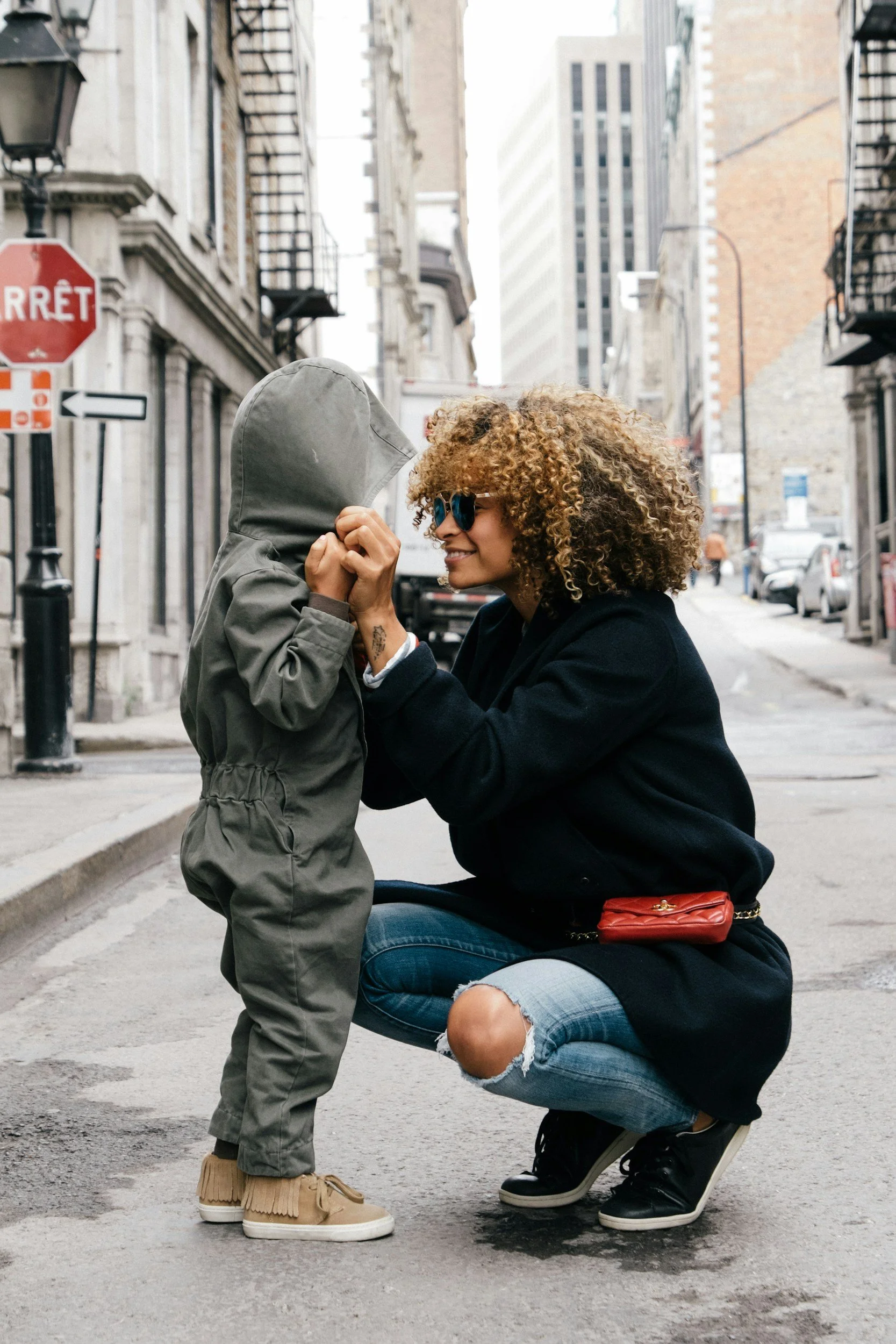
You're trying to get out the door in the morning and your child refuses to get dressed. You've asked several times, you're already running late, and suddenly you snap. Maybe your voice gets louder than you intended. Maybe you say something that sounds a little too familiar—something you remember hearing when you were growing up.
Later, you wonder, Why did I react so strongly to that?
Sometimes the answer is pretty straightforward. You're tired, stressed, and trying to get everyone where they need to be. But parenting also has a way of bringing old experiences to the surface. The way we learned to handle emotions, conflict, closeness, and separation can shape how we respond to our own children, often without us realizing it.
Your attachment style can influence many parts of parenting—from caring for a newborn to comforting an upset child to watching a teenager become more independent.
Understanding these patterns isn't about blaming your parents or picking apart every interaction with your child. It's about recognizing what you bring into relationships and noticing when old reactions may be influencing what is happening now.
What Is an Attachment Style?
Attachment refers to the emotional bonds we form with important people in our lives. Our earliest relationships help shape what we come to expect from other people. Attachment styles influence our beliefs in relationships and shape unspoken questions like:
Can I count on someone when I'm upset?
Is it okay to need help?
What happens when I'm angry?
Will someone still be there after we have a conflict?
Over time, these experiences can contribute to different attachment patterns.
Four common Attachment Styles:
People with a secure attachment style are generally able to feel close to others while also tolerating independence and time apart.
With an anxious attachment style, there may be more worry about rejection or losing connection, along with a stronger need for reassurance.
Avoidant attachment can look more like keeping emotional distance, relying heavily on yourself, or pulling back when relationships feel intense.
With a disorganized attachment style, closeness can feel both wanted and uncomfortable at the same time, which may lead to mixed or unpredictable responses during stressful moments.
These patterns aren't always clear-cut. Many people recognize parts of themselves in more than one style. They can also show up differently depending on the relationship, what's happening in your life, and how much stress you're under.
How Your Relationship Patterns Can Show Up in Parenting
Becoming a parent changes many of our closest relationships at once. There is the relationship with our child, but also with our partner, our own parents, other family members, and even ourselves.
There's also a new experience of being responsible for someone who depends on you. As children grow, that dependence changes. A baby needs almost constant care. A toddler may want to be by your side almost all day, but can also explore the world more independently. An older child begins building important relationships outside the family. Eventually, a teenager starts creating more distance and independence.
Each stage can bring out different reactions in us.
A parent who worries about losing connection may have a particularly hard time when a child is angry with them or wants more space. Someone who learned to cope with intense emotions by pulling away may feel overwhelmed by a child who wants a lot of reassurance or closeness.
These reactions can be subtle. They may also become much more noticeable when we're under stress or moving through a major life transition.
Postpartum Can Bring Old Patterns to the Surface
The postpartum period is one of those transitions. And it can hit you like a ton of bricks.
Bringing home a new baby creates an enormous amount of change at once. Suddenly, someone depends on you for everything. Your normal routines are gone, sleep can be completely unpredictable, and there is very little certainty about what you're supposed to be doing.
For mothers, this is also usually happening alongside physical recovery and major hormonal changes. Even parents who normally feel confident can find themselves second-guessing everything.
Is the baby eating enough? Why are they crying? Should I pick them up again? Should they be sleeping more? Am I doing this right?
For someone who already tends to worry about relationships or whether they're meeting other people's needs, that uncertainty can turn into constant monitoring and reassurance seeking.
A mother may have trouble stepping away even when her partner is caring for the baby. She might listen for every sound while trying to rest or feel guilty taking time for herself. She may know the baby is safe and cared for but still feel like she needs to stay close and alert.
Another parent may respond to the intensity very differently. When every day becomes about feeding, sleeping, soothing, and anticipating the baby's next need, they may begin pulling away from friends, their partner, or hobbies. Someone who tends to cope with overwhelm by withdrawing may notice that tendency becoming stronger.
These dynamics can also affect the relationship between partners. A father may genuinely want to help but feel unsure of his role when the baby settles more easily with the mother. He may interpret that as not being needed and gradually step back, while his partner experiences his distance as a lack of support.
And this isn't limited to first-time parents. A second or third baby changes the family again. There are new roles, different demands, and new relationships to navigate between parents and siblings.
None of these reactions automatically mean there is a problem. The postpartum period is demanding for everyone. But because it involves so much uncertainty, dependence, closeness, and change all at once, it can make our usual ways of responding to relationships easier to see.
As Children Grow, New Patterns Can Emerge
Parenting continues to bring new challenges as children get older.
Imagine your teenager becomes upset during an argument, walks into their room, and shuts the door.
One parent immediately follows. They want to resolve the disagreement now. They knock and ask repeatedly, "Are we okay?" because leaving the conflict unresolved feels uncomfortable.
Another parent thinks, Fine. If they don't want to talk to me, I'm not going to talk to them either, and pulls away too.
Our own relationship history can influence how comfortable we are allowing our children to be angry with us, how quickly we try to resolve conflict, how we respond when they need reassurance, and how we handle their growing independence.
You may notice that you:
have a hard time when your child is upset with you
feel responsible for keeping your child happy
avoid setting limits because you're worried about the reaction
feel overwhelmed when your child needs a lot of emotional reassurance
struggle as your child becomes more independent
frequently wonder whether you're parenting the "right" way
pull away when emotions become intense
These aren't proof of a particular attachment style. They're simply patterns worth noticing.
When Your Child's Emotions Are Hard for You, Too
Our history can also shape how comfortable we are with our children's emotions.
Imagine your 7-year-old comes home upset because a friend didn't play with them at recess.
You immediately start trying to fix it. You ask exactly what happened, wonder whether you should contact the teacher, suggest other kids they could play with, and reassure them that everything is going to be okay.
Your child may really just need you to listen and sit with them while they're sad. But that can be surprisingly uncomfortable.
If difficult feelings weren't handled very comfortably in your family growing up, your child's distress may make you anxious. You may feel responsible for making it better as quickly as possible.
Another parent may react differently. Their child's tears make them uncomfortable or irritated. They find themselves thinking, This isn't that big of a deal, and wanting the conversation to end.
Neither response automatically tells us anything definitive about a parent's attachment style. But our children's feelings can bring up our own discomfort with sadness, anger, fear, or vulnerability.
Recognizing that can help us separate what our child needs in the moment from what the situation is bringing up for us.
Repair Matters More Than Perfect Parenting
Learning about attachment styles can sometimes give parents one more thing to worry about.
Did I respond quickly enough? Did I hurt our relationship when I lost my patience? Should I have handled that differently?
Secure attachment doesn't require perfect parenting.
Parents get frustrated. Children get angry. People misunderstand each other. There will be times when you aren't as patient as you wanted to be or when you realize that you handled something poorly.
What matters is that relationships can recover from those moments.
Maybe you lose your patience at bedtime and raise your voice. Later, when things are calmer, you go back and say, "I was really frustrated earlier, and I yelled. I wish I had handled that differently. I'm sorry."
Your child learns that conflict doesn't mean the relationship is over. People can get upset, take responsibility, and reconnect.
For some parents, learning to repair with their own children is also very different from what they experienced growing up.
Getting Curious About Your Own Patterns
You don't need to spend every parenting moment analyzing your childhood. Instead, pay attention to situations that consistently bring up more emotion than you expect.
You might ask yourself:
What happens for me when my child is really upset?
How do I react when my child is angry with me?
Do I feel like I need to fix things immediately?
Do I pull away when there's too much emotion?
What comes up for me as my child becomes more independent?
What did my own family do with sadness, anger, fear, or conflict?
Do I notice similar patterns in my relationship with my partner?
Sometimes the most useful observation is simply, This is bringing something up for me.
That awareness can create a little more space between your reaction and what you do next.
Understanding Your Patterns Through Therapy
Every parent brings something from their own childhood into parenting.
There may be things you loved about how you were raised and want to pass along. There may also be experiences you hoped you would handle differently. Then you have children and discover that knowing what you don't want to repeat doesn't always make it obvious what to do instead.
Understanding your attachment style can help make sense of reactions that otherwise feel confusing or stronger than you expected. It can also help you see patterns that extend beyond parenting and show up with your partner, family members, or other important relationships.
Therapy can provide a place to better understand these patterns, where they may have come from, and how they continue to affect the way you relate to your children and other people in your life. With greater awareness, you can begin to recognize when an old pattern is showing up and decide whether it's still serving you—or whether you want to respond differently.
Your attachment history is part of your story, but it doesn't have to determine what comes next.

Looking for therapy, parent support, or psychological assessment in California?
Elizabeth Loyola, PsyD, founder of The Child Psychology Center and guest writer of this blog post, is a licensed psychologist who specializes in working with children, teens, young adults, and parents. Her areas of expertise include anxiety, OCD, ADHD, autism, parenting concerns, and psychological assessment.
The Child Psychology Center provides neurodiversity-affirming therapy, parent support, and comprehensive psychological evaluations for concerns including, ADHD, autism, learning differences, anxiety, and mood.
We offer in-person services in Carlsbad and Sacramento, California, as well as virtual therapy and parent support throughout California.
Learn more about The Child Psychology Center or contact us to see if our team may be a good fit for your family.
At Eating Disorder OCD Therapy, we provide therapy for Eating Disorders, OCD, Body Image concerns, Trauma, and Perinatal Mental Health. We also offer Ketamine Assisted Psychotherapy (KAP), Group Therapy (globally), Recovery Coaching (globally), and Clinical Supervision for clinicians.
We are neurodiversity affirming, queer and trans affirming, Health at Every Size aligned, and strive to be actively anti-racist.
We are currently accepting new clients for in-person therapy in San Diego, California as well as virtual therapy services throughout California, Florida, Maryland, Tennessee, Utah & Washington.
