

OCD Specialists in San Diego, CAlifornia
In person OCD Therapy in San Diego, CA | Virtual OCD Therapy in California, Florida, Maryland, Tennessee, Utah & WAshington
Specialized therapy for OCD is life changing.
OCD is a misunderstood and serious mental Health Condition.
It’s not about a love of organizing or handwashing, it’s about living with distressing, unwanted intrusive thoughts and the exhausting rituals (or compulsions) used to cope with them.
At ED & OCD Therapy, we offer compassionate, evidence-based treatment to help you break free from the OCD cycle, reconnect with your values, and build trust in yourself again.
So what exactly is OCD?
OCD is characterized by recurrent, unwanted intrusive thoughts, followed by compulsions. Compulsions can be physical, mental, reassurance seeking or avoidance based. This means the stereotypical ‘Hollywood’ picture of OCD is very misleading. We grow up thinking OCD is handwashing and a love for cleaning- and while sometimes symptoms can manifest this way; the person never ‘loves’ it. The person feels compelled to do it, in fear that something terrible will happen if they don’t.
OCD is not enjoyable and it’s not a personality “quirk”. It’s full of fear, anxiety, disgust and dread. It’s also important to note that OCD has different subtypes, meaning symptoms present in different ways for different people. Check out this blog post we wrote to understand what causes OCD subtypes.

What are common subtypes of OCD?
-
Fear of harming someone including kids, partner, friends, family members, fear of hit and run, fear of shoving someone in the train, fear of blurting out obscenities.
-
Including fear of molesting children (POCD), incest, sex with animals, anything taboo you can think of.
-
Feeling compelled to follow religion/morals perfectly out of fear of going to hell if you do one thing wrong.
-
Needing things to feel ‘just right’ or perfect, or something bad will happen.
-
Fear of getting sick or getting someone else sick, includes emotional contamination fears (i.e. if I talk about this illness I will get it).
-
Obsessions about past events and what people are thinking
-
Fear of being in the wrong relationship or not actually loving your partner. This can sound like: “Am I with the right person?” “I’m not attracted to that other person- I must not actually love my partner.”
-
Repetitive and unwanted thoughts around the meaning of life.
-
Common during pregnancy, often manifests as obsessions about harming the baby.
-
“What if I am actually gay/lesbian/hetero— or what if I am a different gender than I think I am and I just don’t know it?
*This is different than genuine explorations of gender and sexuality, these are driven out of intense anxiety and compulsions that never actually help the person feel closer to “knowing”
-
Intense fear of doing/saying something out of alignment with your values of social justice, and being “caught” or a fraud. Usually includes a fear of being socially ostracized or harming someone as a result of accidentally “being racist” or transphobic.
-
Fear of contracting an illness or unknowingly negatively impacting your health.
-
Intrusive thoughts about organization and symmetry.
As you read this list, you might be thinking: “wait so if I have had these thoughts, does that mean I have OCD?” Not quite. Most people get intrusive thoughts from time to time, but with OCD the intrusive thoughts are “sticky” and bothersome.
They become repetitive, and the person develops intense anxiety and fear of the thoughts. The person with OCD then develops compulsions in an attempt to make them go away or ease the anxiety.
This becomes a vicious cycle and keeps the thoughts coming non-stop.
The paradox of OCD is, the harder you try not to think about it, the more your brain will fire the thoughts.
Trying to “just stop” your thoughts does not work—otherwise no one would have OCD.
The goal of OCD treatment is to change your relationship to the intrusive thoughts.
What is Our Approach to OCD Therapy?
We take an integrative approach, grounded in a client centered and anti-oppression framework. Therapeutic Modalities used include:
-
ERP helps you face your fears head on- the mechanism of change includes habituation and inhibitory learning. This is what ERP looks like:
We will create a hierarchy of all the compulsions attached to your OCD fears and gradually challenge the compulsions while exposing you to the fear (also gradually).
We can go as slow or fast as you want, you set the pace, but the idea is to break the obsessive-compulsive cycle.
When we stop doing compulsions; the obsessive thoughts eventually lose their grip.
When we face our fear and the feared consequence doesn’t happen the way OCD says it will (or at all), we disconfirm the fear and/or learn we can tolerate the discomfort of it. This process updates the fear center of our brain and helps us habituate to the anxiety.
The overarching goal is to learn to embrace uncertainty. ERP teaches you to tolerate discomfort, uncertainty and fosters self-trust.
ERP is considered the gold standard treatment for OCD and it can be so empowering.
Due to the distress it causes in the short term, some people do not want to do ERP- that is okay! There are other evidence based modalities for treating OCD which we will go over below.
-
In I-CBT therapy, we help you learn about the inferential confusion process and resolve the obsessive doubt- which is the core of OCD.
Obsessional doubt is a process that takes us out of reality, makes us distrust our senses and leads us into the OCD bubble- aka the land of imagination where possibility is treated as probability and here and now evidence is dismissed.
In I-CBT, we help you ‘shine a light’ on the reasoning tricks of OCD, so that we can learn to turn away from using OCD’s strategies and learn to tune into our true, reality based sense data to guide our behaviors.
In I-CBT we also identify your feared possible self (who you are afraid you might become if your intrusive thoughts are real). This helps us get to the root of your suffering, so that treatment may be lasting.
This model is all about building self trust and moving away from trusting OCD.
This model requires no exposure and may be a more effective approach for neurodivergent folks especially if there are sensory sensitivities involved.
-
ACT is an evidence based model of therapy that helps us develop more mindful and defused ways of relating to our thoughts so that we aren’t so blended with them.
ACT helps us develop mindfulness strategies in order for our thoughts to begin floating by rather than getting hooked onto them.
It helps us become an observer of our mind so that we can get ‘unstuck’ and make room for us to focus on our true self values.
When we can unhook from our thoughts, we can get back into our present life and live more in line with our values, which research has shown leads to greater life satisfaction and psychological relief.
ACT is used in conjunction with ERP or I-CBT, not as a standalone treatment for OCD.
Please note: all of the above approaches are considered first and second line treatment options (including ERP as the ‘Gold Standard’) by the International OCD Foundation. While we draw from these modalities, we tailor your treatment plan collaboratively, adjusting based on your unique needs, capacity, neurodiversity and therapeutic goals.

Who is OCD Therapy For?
This service is for teens and adults in California, Florida, Maryland, Tennessee, Utah and Washington State who are struggling with intrusive thoughts, compulsive behaviors (also known as rituals) or persistent anxiety driven by OCD.
We also specialize in working with neurodivergent folks, and those whose OCD themes intersect with other co-occurring issues such as Eating Disorders, Anxiety, Panic Disorder, Depression, ADHD and more.
You do not need to have been previously diagnosed with OCD to work with us. We believe that any amount of suffering with intrusive thoughts and compulsions warrants treatment- and research shows the earlier the intervention, the better!
What OCD Therapy Can Help you WIth:
Reduce compulsions and break the obsession-compulsion cycle
Learn to tolerate uncertainty and distress without rituals/compulsions
Build self-trust and stop over-identifying with intrusive thoughts
Reconnect with loved ones and daily life outside of OCD
Understand and heal the root fears driving your OCD
Relapse prevention
Cope with painful emotions that often come with OCD such as shame, grief, embarrassment, etc.
Session Structure: What You Can Expect
Sessions are typically held weekly, either virtually or in-person.
The initial sessions focus on building a solid client-therapist relationship as this is the most important factor for long term healing regardless of therapy modality being used.
We then work towards understanding your OCD experience through thorough assessment and functional analysis, identifying intrusive thoughts, compulsions, your feared possible self and providing LOTS of psycho-education on why your brain is operating this way (knowledge is truly power here).
We then move into skill-building and targeted interventions using ERP, I-CBT, or ACT — based on which approach resonates with you most.
As therapy progresses, we may space out sessions or focus on relapse prevention and values-based living. We often reduce frequency of sessions at this point unless you have other things you need support on!
Special Features and Techniques That We Use
Neurodivergent-affirming accommodations (no forced exposures, autonomy centered, accommodations to limit distress, no sensory based exposures)
Real-world and imaginal exposures (for ERP)
Exploration of “feared possible self” (in I-CBT)
Mindfulness tools and cognitive defusion strategies (from ACT)
Ketamine Assisted Therapy- read about the benefits of ketamine therapy for OCD!
Optional medication consultation referrals
Collaborative approach: OCD treatment should never be forced (example: exposure hierarchies made without your consent and collaboration).
*These are not used or required with every client- so ignore what may not be wanted or relevant to you!

What Our Clients Commonly Tell us…
Our clients often arrive feeling overwhelmed, ashamed, afraid or unsure if their thoughts make them bad or disgusting. In therapy, they discover that OCD is not who they are. It’s something they’re experiencing due to:
Brain wiring: brain scans of OCD show an overactive fear center of the brain- this overrides logic.
Obsessional reasoning process— we tell ourselves a very convincing story rooted in logic (though misapplied), over time this begins to feel like our truth.
Lack of self trust— often from past experiences or ways you have been treated that become internalized.
Over time, our clients learn to identify OCD from their real self, reduce its control, and feel more confident navigating life without compulsions.
Life After OCD Therapy Feels like:
Freedom from debilitating OCD rituals and rumination
Greater ability to tolerate uncertainty and distress
Strengthened self-trust and decision-making without constant rumination
Renewed capacity for connection, joy, and spontaneity
Living more fully in alignment with your values, not fear of intrusive thoughts
Being supported with sustainable and reliable tools for managing future flare-ups
OCD Therapy changed my life- and we have helped countless clients with OCD find the same freedom.
Through a combination of ERP and other therapies such as I-CBT, Acceptance and Commitment Therapy, your life can be a million times better.
I know it is scary, but you can do this and you are not alone! Reach out to us today or book an appointment and let’s get started!
Frequently Asked Questions
-
We know it can be incredibly hard to name the thoughts that come with OCD. They often are incongruent with our values and actual desires. Some OCD fears are taboo in nature- and we get it! You’ll receive zero judgement from us, as fellow humans with OCD, we most likely have had similar thoughts. Also, you do not need to share anything with us that you aren’t ready for.
-
It honestly depends. The skills are not hard to learn per se, but putting them into practice while navigating every day life stuff can be really hard. On average, I would say that many clients without any co-occuring diagnosis or major life stressors— feel a significant amount of relief by six months. Of course, many find bits of relief along the way, it’s something that gradually improves and strengthens over time. That being said, many clients continue therapy longer to work through underlying challenges unrelated to the OCD itself. The option is totally yours!
-
Cost per session ranges between $165-275 depending on clinician location and experience level. Visit our rates page for more info.
-
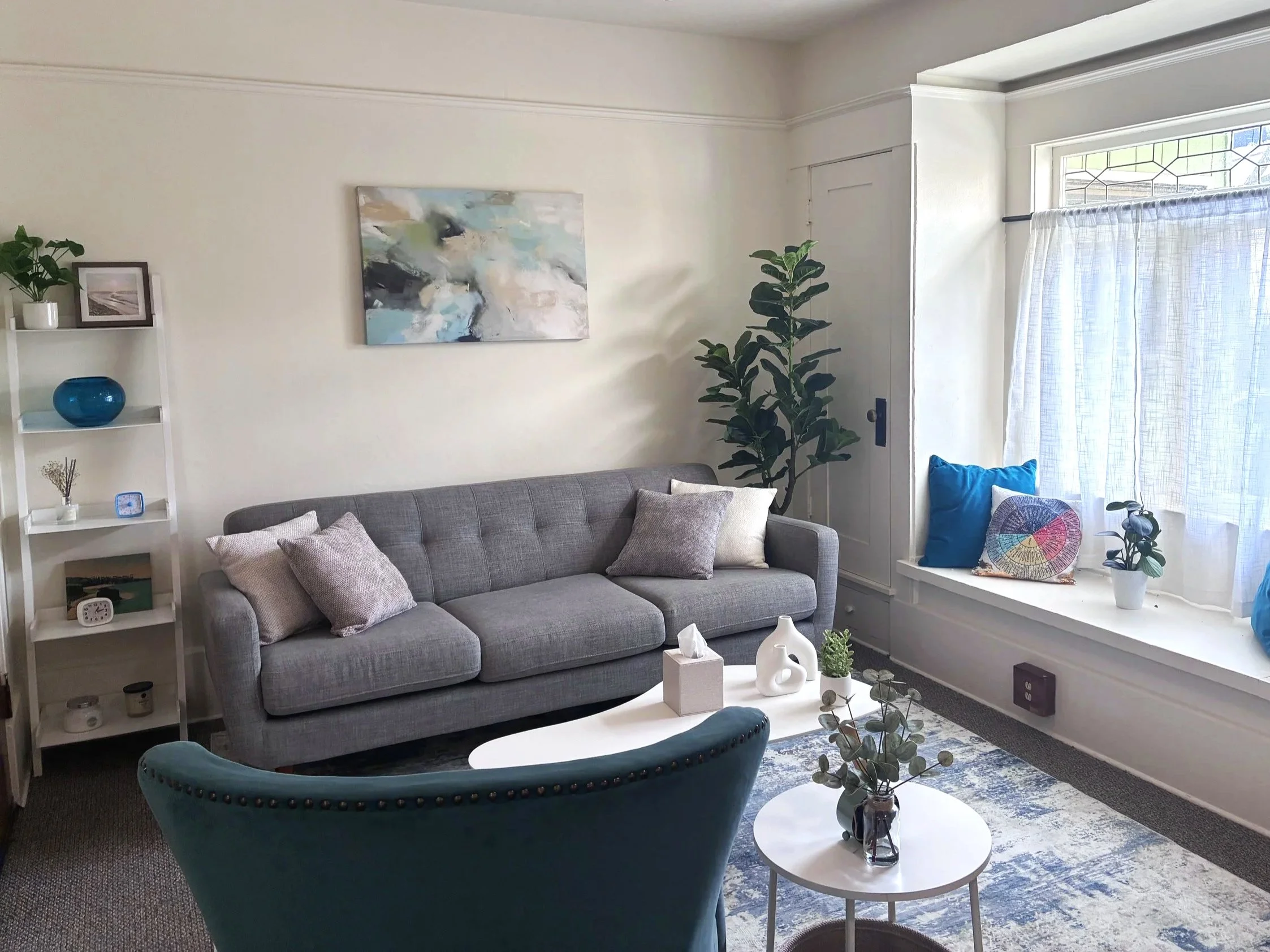
Yes, we provide in person OCD therapy in San Diego, CA at our Hillcrest office.
In-person spots are limited, but we also provide virtual therapy for OCD.
-
Specialization is a combination of time spent working with a specific population, continuing education focused on OCD and co-occurring issues and whether or not someone has received adequate consultation and supervision from those in the field longer than oneself. Generally, members of the International OCD Foundation can be trusted as they are vetted by the organization. We are happy to say we are on their list of vetted providers.
-
One thing that makes us different is that we are trained in both ERP and Inference based OCD. Many OCD therapists are purely ERP trained. We believe being trained in both helps us more fully meet the needs of our clients. We are also against making our clients do “fear factor” exposures- unless you come in saying you want to do that of course!
-
Yes! We have had great success in helping clients overcome taboo OCD themes- and the shame that so often accompanies them.
-
You can reach out heretoschedule a call with us or you can email us at: info@eatingdisorderocdtherapy.com
Interested in Learning More About OCD Recovery?
Check out Our Blog Posts





Ready to start therapy?
⟡
Ready to start therapy? ⟡

At Eating Disorder OCD Therapy, we offer compassionate, empowering care informed by a blend of evidence-based treatment, liberation psychology, and wisdom from lived experience. Our work prioritizes autonomy, collaboration, consent, and trust, and above all else- we strive to create a space where clients feel understood rather than pathologized.
We provide therapy for Eating Disorders, OCD, Body Image concerns, Trauma, and Perinatal Mental Health. We also offer Ketamine Assisted Psychotherapy (KAP), Group Therapy (globally), Recovery Coaching (globally), and Clinical Consultation and Supervision for clinicians. We are neurodiversity affirming, queer and trans affirming and strive to be actively anti-racist. We are currently accepting new clients for in-person therapy in San Diego, as well as virtual therapy services in California, Florida, Maryland, Tennessee, Utah and Washington.